
The Best Toys I'd Buy My Child (And Why They're Probably Not What You Think)
As a mum who thinks a lot about how children learn, I get asked all the time: "What toys should I actually buy?" My answer might surprise you, because the best toys are usually the ones that do the least.
Less Is More (Really)
We live in a world of flashing lights, sound effects, and toys that do everything for your child. But here's the thing. When a toy does all the work, your child's brain doesn't have to. And that's where the magic of learning gets lost.
Open-ended toys (sometimes called loose parts) are simple, versatile, and endlessly imaginative. There's no right or wrong way to play with them. No batteries required. No single purpose. Just a child, their curiosity, and infinite possibility.
My Favourite Open-Ended Toys
Here's what I'd actually put in my child's play space:
🧱 Wooden Unit Blocks
The original open-ended toy. Blocks can become a tower, a road, a castle, a farm, or a rocket ship, whatever your child's imagination decides today. They build spatial reasoning, problem-solving, and persistence (especially when the tower falls and they try again).
🔮 Kinetic Sand
Satisfying, sensory, and endlessly reusable. Children can mould, cut, pour, and sculpT, developing fine motor skills and hand strength while being completely absorbed. It's calm, focused play at its best. Bonus: you can make it at home with just two ingredients.
🔵 Marble Runs
Part engineering challenge, part cause-and-effect discovery. Children experiment, problem-solve, and learn to think sequentially, all while having a blast watching that marble zoom through their creation. There's something deeply satisfying about building a run, testing it, adjusting it, and trying again.
🌿 Nature Items
Sticks, stones, pinecones, shells, seed pods, leaves. Free, beautiful, and wildly versatile. Nature loose parts invite sorting, counting, building, storytelling, and sensory exploration. A basket of natural items on your shelf is one of the best investments you'll make, and it costs nothing.
🪵 Wooden Rings, Discs & Planks
Simple wooden shapes become balance beams, stepping stones, pretend food, building materials, or sorting tools. They grow with your child and never go out of style.
🫙 Containers, Scoops & Funnels
Paired with rice, dried pasta, water, or sand. These humble items create hours of sensory play. Pouring, scooping, measuring, and transferring are all deeply satisfying for little hands and developing brains. Set up a tray, add a scoop and a bowl, and watch your child disappear into it for an hour.
🎨 Open-Ended Art Supplies
Plain paper, beeswax crayons, watercolours, clay. No colouring-in sheets, no templates, just space to create freely. Process over product, always.
Why This Kind of Play Matters
Open-ended play isn't just fun, it's how children develop the skills they'll use for life: creativity, resilience, critical thinking, and the ability to entertain themselves (yes, really). When children direct their own play, they build confidence and independence alongside all those cognitive skills.
The research is clear: children learn best through play that is self-directed, hands-on, and open to interpretation. A child who has learned to play independently with simple materials is a child who can problem-solve, focus, and create, skills that matter far beyond the playroom.
How to Bring This Into Your Home
You don't need to overhaul your entire toy collection. Start small:
- Rotate toys so there's less choice and more depth
- Add a basket of natural loose parts to your play space
- Set up a simple sensory bin with rice or dried lentils and a few scoops
- Put out the blocks and step back. Resist the urge to show them "how"
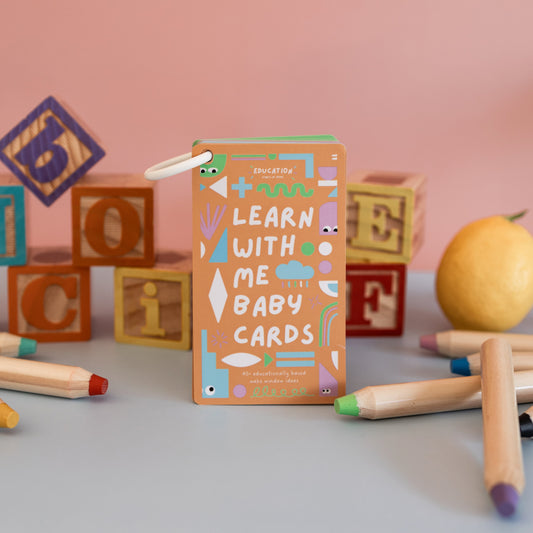
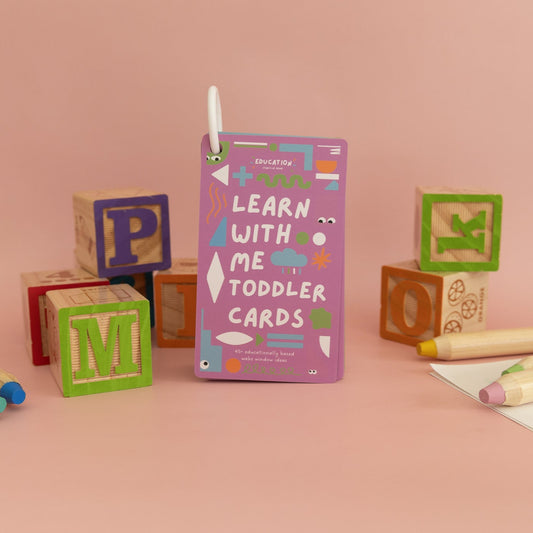
And if you're wondering what to actually do with all these open-ended materials? That's exactly what our Learn With Me Activity Cards are designed for. Every single activity uses simple, open-ended items you already have at home. No specialist equipment, no expensive kits. Just meaningful play, made easy for busy parents.
If sensory play is calling your name (and your child's), our Sensory Play Guide is a beautiful place to start. Packed with ideas using everyday items like rice, water, sand, and playdough to create rich, engaging experiences your child will love.
Because the best play doesn't come from the most expensive toy. It comes from giving your child the space, the materials, and the freedom to imagine.